Multiplying by 3

https://youtube.com/c/TaminangThereseN

Advertisements

Multiplying by 3

Multiplying by 3 is Basic assistance for kids in Mathematics. A practical touch on how to use the multiplier and the multiplicand to come out with the product.

This lesson, “Multiplying by 3”  is aimed at helping those pupils who, after passing through levels one (Primary 1 and 2) reach levels two and three (Primary 3 – 6) without being able to solve a simple equation in Mathematics. This makes them fail their exams, not because they are dull. Some teachers also hurriedly teach Mathematics without taking into consideration some basic principles. This class of pupils is merely slow to understand and needs gradual guidance in the calculation. This blog answers the difficulties faced by these pupils at all levels. Parents and teachers are advised to use this book for a better result in the performance of the Slow Learners.
https://youtu.be/QKaaIYfsU1s

Advertisements
Multiplying by 3
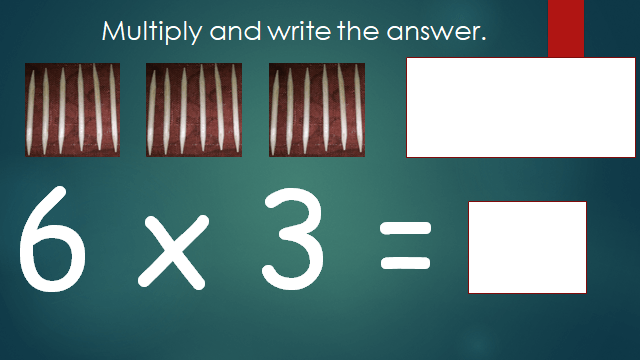
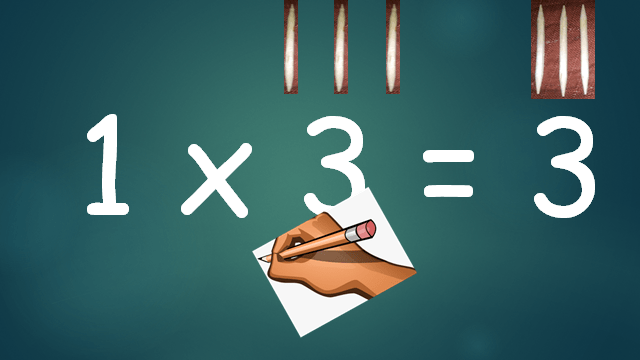
Multiplying 1 by 3
Multiplying 1 by 3
Advertisements
Advertisements
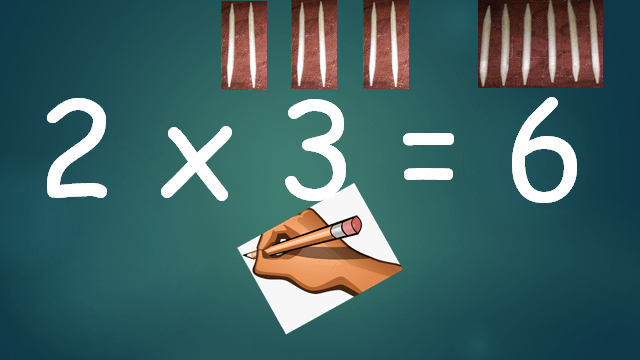
Multiplying 2 by 3
Multiplying 2 by 3
Advertisements
Multiplying 3
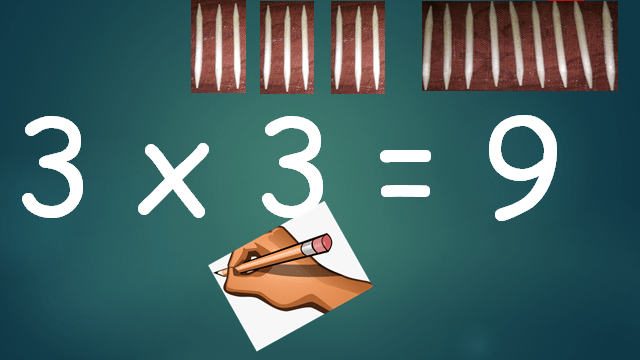
Multiplying 3 by 3
Advertisements
Multiplying by 3
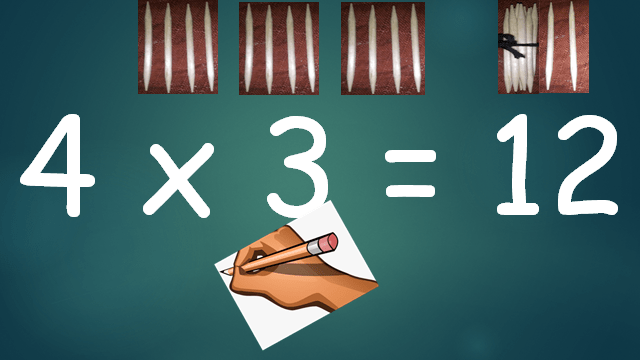
Multiplying 4 by 3
Advertisements
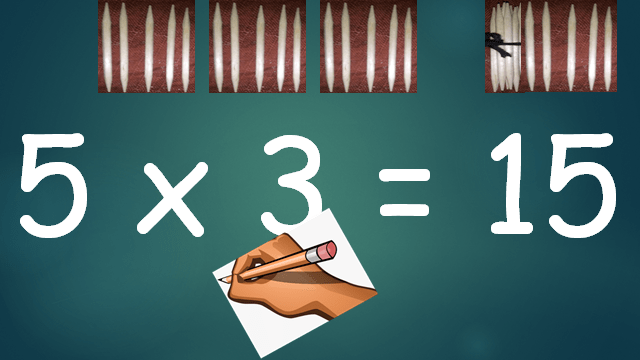
Multiplying 5 by 3
Multiplying 5 by 3
Advertisements
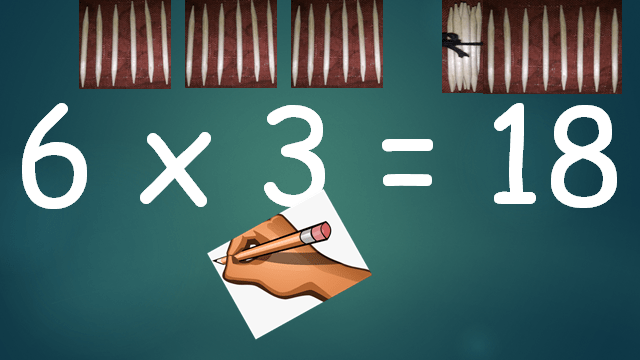
Multiplying 6 by 3
Multiplying 6 by 3
Advertisements
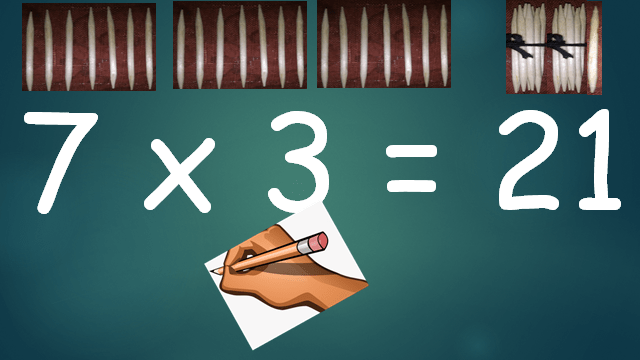
Multiplying 7 by 3
Multiplying 7 by 3
Advertisements
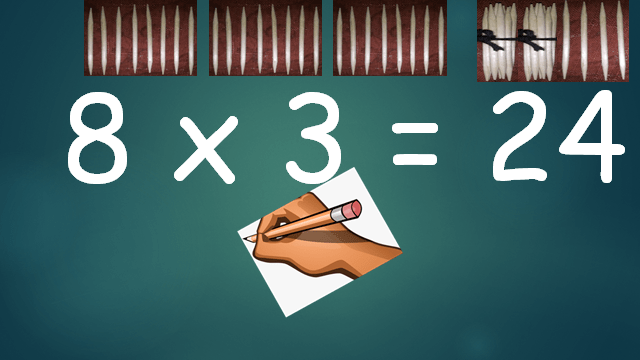
Multiplying 8 by 3
Multiplying 8 by 3
Advertisements
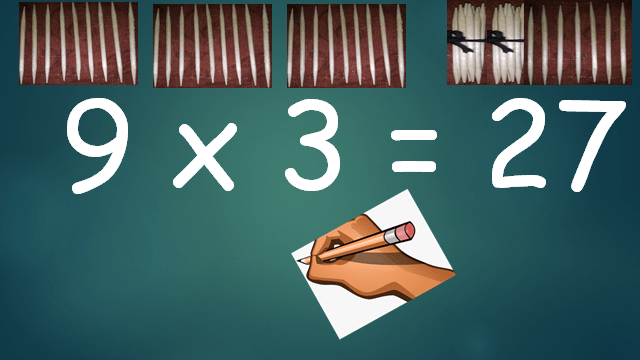
Multiplying 9 by 3
Multiplying 9 by 3
Advertisements
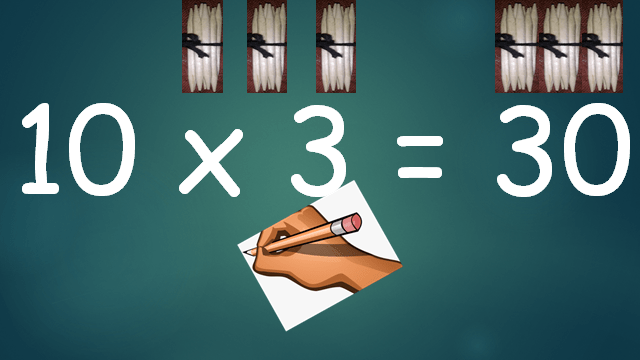
Multiplying 10 by 3
Multiplying 10 by 3
Advertisements
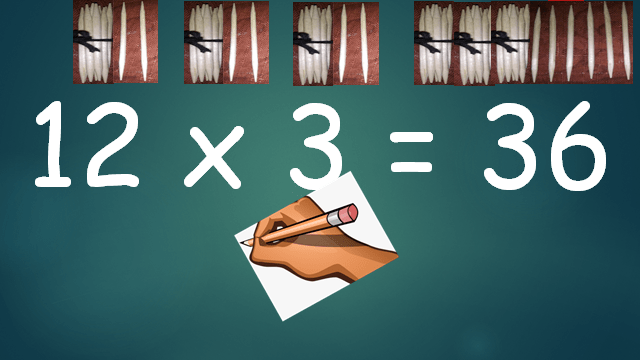
Multiplying 12 by 3
Multiplying 12 by 3
Advertisements
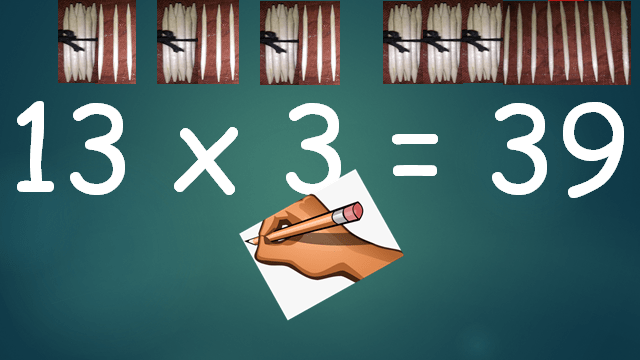
Multiplying 13 by 3
Multiplying 13 by 3
Advertisements
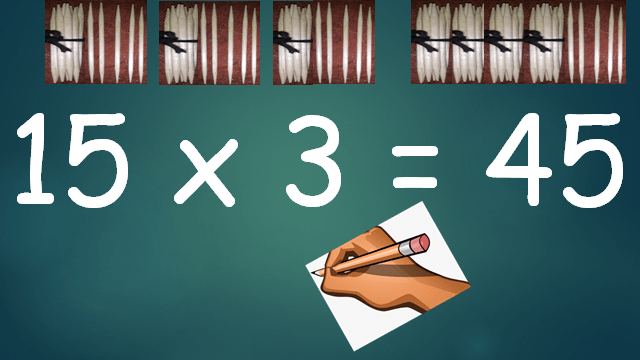
Multiplying 15 by 3
Multiplying 15 by 3
Advertisements
Multiplying 15 by 3
Multiplying 15 by 3
Advertisements
Multiplying by 3
Multiplying 6 by 3
Multiplying by 3 Adding Numbers up to 20
Advertisements

Basic Multiplication by 2 and 3

Related Pages

Stories That Bring Great Impact On Life
Aspects Of The English Language

Basic Mathematics

Poems About Life

Responsorial Psalm Chants For Sundays

General Knowledge Questions and Answers Revision

Nkwen Language Lessons

Nkwen Language Gospel Readings For Year C

Home

Advertisements

Latest Posts

https://youtube.com/c/TaminangThereseN

Advertisements

Pages

Advertisements

The Sentence

The Sentence

A sentence is a group of words that contains at least a subject and a predicate and expresses a complete thought.
The following lesson presents to you the definition of a sentence and a clause and also states the different forms of sentence structures and clauses.
You may read through the text or listen to the video below or follow the lesson on YouTube by clicking the link below.

https://youtube.com/c/TaminangThereseN

https://youtu.be/YYmOP8WYFv4


Advertisements
Advertisements

What is a  Sentence?

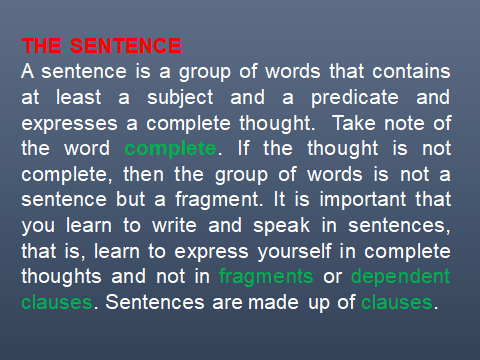
A sentence is a group of words that contains at least a subject and a predicate and expresses a complete thought. Take note of the word complete. If the thought is not complete, then the group of words is not a sentence but a fragment. It is important that you learn to write and speak in sentences, that is, learn to express yourself in complete thoughts and not in fragments or dependent clauses. Sentences are made up of clauses.


A clause

A clause is a group of words containing a subject and a predicate and may be used as part of a sentence. The subject of the clause is what is spoken about while the predicate is what is said about the subject. In other words, the subject is that part of the sentence that shows

  1. who is speaking,
  2. who is spoken to, or
  3.  the person or thing spoken about.

The predicate is that part of the sentence that tells you what the subject does or what is done to the subject. The core of the predicate is a verb which can also be one word or more than one word. In “Julie has eaten meat” Julie is the subject because it is what is spoken about while “eaten rice” is the predicate, that is, what is said about the subject.

There are various types of clauses:
1. Finite clause,
2. Non-finite clause
3. Main or independent clause
4. Subordinate or independent clause


Finite Clause: it is one with a conjugated verb that expresses a specific time of the action or state expressed by the predicate, for example,

  • Susan will drink juice.
  • I am going to school.

Non-Finite clause: A non-finite clause is one
whose verb is not conjugated (is in the
infinitive) such that the time of the action or
the state expressed by the predicate is not
specified. E.g

  • I want Susan to go home.
  • Jane wants to sit with Mark

Main or Independent Clause: it is a group
of words that has a subject and a predicate
and can stand on its own in a sentence. E.g

  • You must hurry or you will be late
    You must hurry(Indep. Clause) or you will be late. (Indep. Clause)
  • Paul fetched wood and Mary fetched water.
    Paul fetched wood(Indep. Clause) and Mary fetched water. (Indep. Clause)

Subordinate or Dependent Clause: It is a group of
words that has a subject and a verb but does not express a complete thought and therefore, cannot stand on its own in a sentence. It modifies and therefore it must be used with an independent clause. It is always introduced by a subordinating conjunction E.g.

  • The people scrambled over the drink because they were hungry.

The people scrambled over the drink (independent clause) because they were hungry. (dependent clause)

  • After the wind ceased, we went to church.

After the wind ceased, (Dependent clause) we went to church. (independent clause)
 There are two main ways to classify a sentence, that is, through structure and through function.


Sentence Structure
  • Simple Sentence: This is a sentence made up of a single clause. Thus, it has only one independent and no subordinate clause. It may have a simple or compound subject and a simple or compound predicate. E.g.
    1. We hired a car.
    2. I gave a basket to Peter.
    3. Mary and James are in class.

Compound Sentence: it is one made up of two or more independent clauses or simple sentences, joined together by a coordinating conjunction, a colon, or a semi-colon. E.g.
1. My father works on Thursdays and attends church on Saturdays.
2. I love sports but I am physically disabled.
3. Flora loves athletics; Siri loves volleyball; James loves basketball.

•Complex Sentence: it contains one main clause and at least one subordinate clause which provides additional information to the independent clause. The dependent clause may come before or after the main clause but it is identified by the fact that it is introduced by a subordinate conjunction e.g

  • We couldn’t present the drama because we arrived late.
  • Though we arrived late we were given the opportunity to present the drama.

•Compound Complex Sentence: it contains two or more independent clauses and at least one dependent clause,e.g. If I have to pass my exams, I need to be much serious and I must also be hardworking.

•Declarative Sentence: A declarative sentence makes a statement and ends with a
full stop. It says something about a noun, that is, a place, person, thing, or idea, e.g.
1. I know John’s hobby.
2. Mulu is ten years old.
3. The pen is on the table.


•Interrogative Sentence: it asks a question and ends with a question mark, e.g.
1. Do you know John’s hobby?
2. How old is Mulu?
3. Where is the pen?

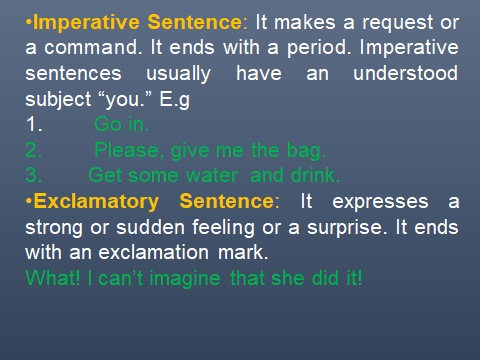
•Imperative Sentence: It makes a request or a command. It ends with a period. Imperative sentences usually have an understood subject “you.” E.g
1. Go in.
2. Please, give me the bag.
3. Get some water and drink.


•Exclamatory Sentence: It expresses a strong or sudden feeling or a surprise. It ends with an exclamation mark.

  • What! I can’t imagine that she did it!


The Sentence
The Sentence


Advertisements

Click this button to view all posts.

blog

Advertisements
Advertisements

The Preposition and Uses

Advertisements

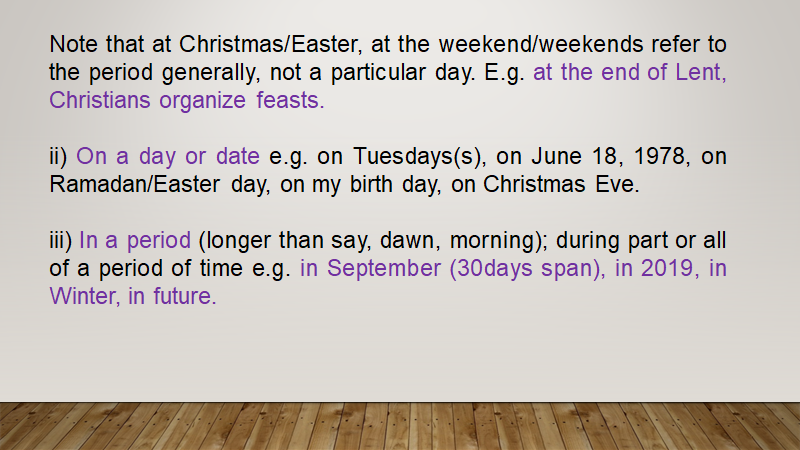
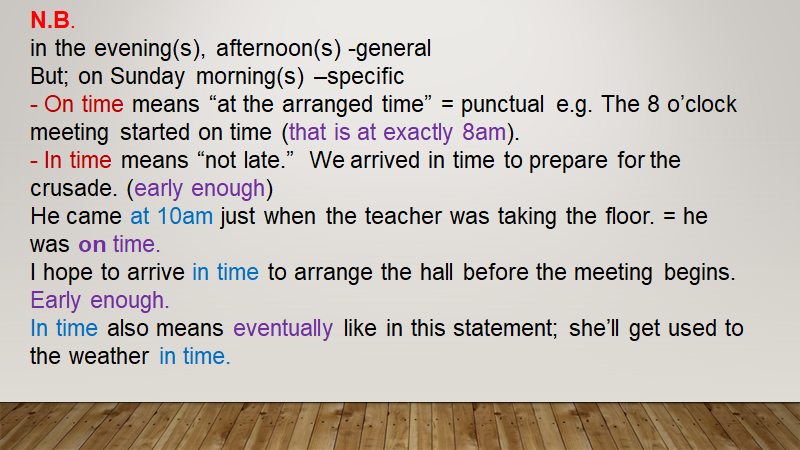
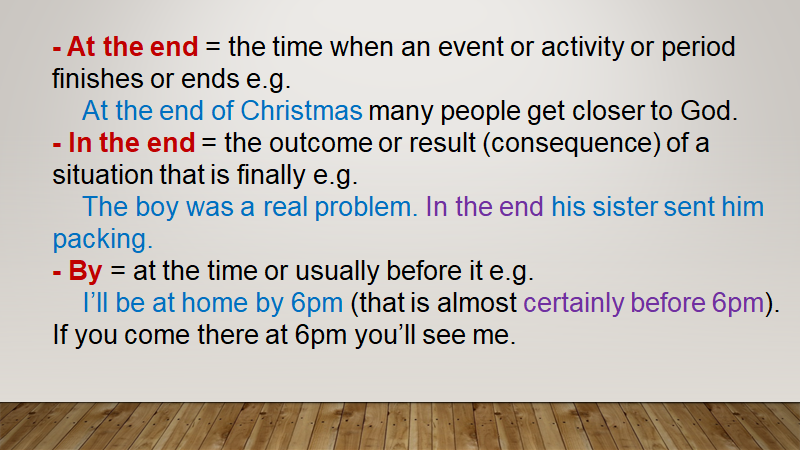
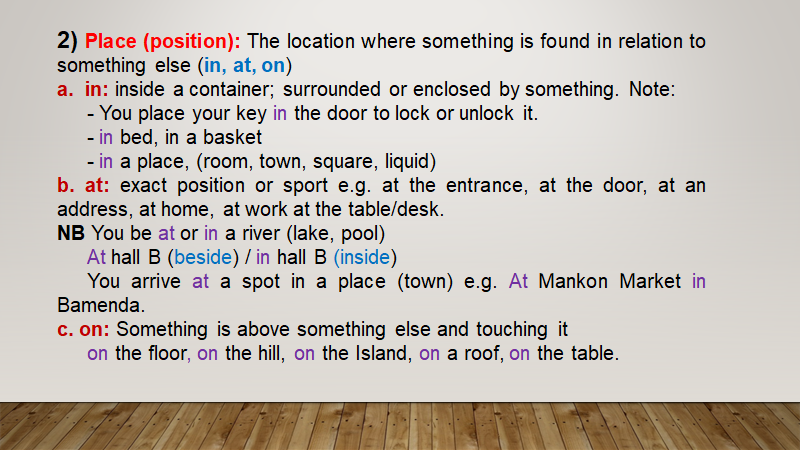
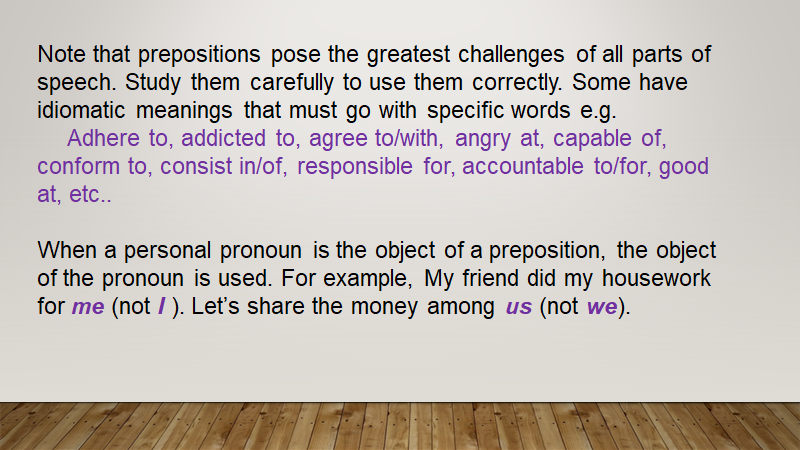
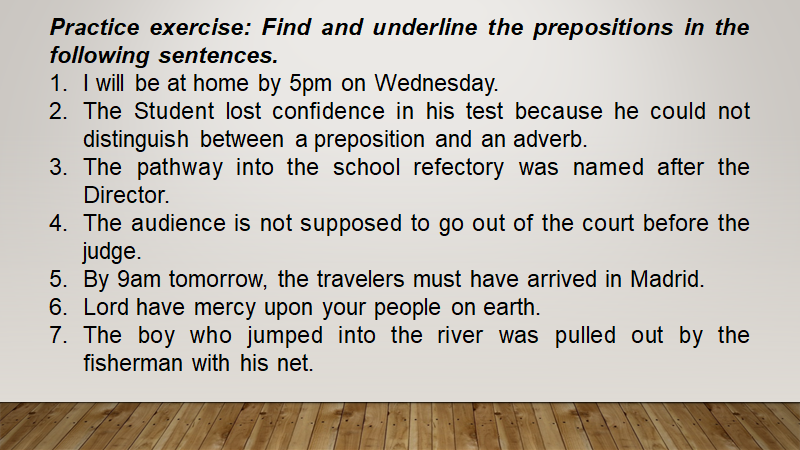
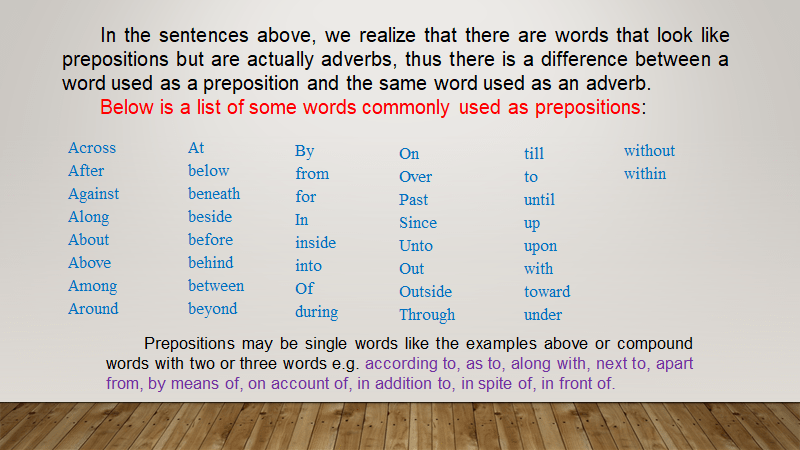
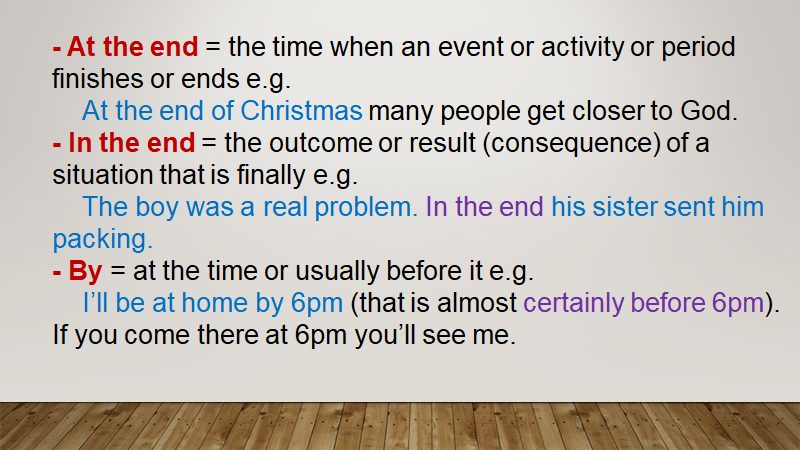
Prepositions and Uses

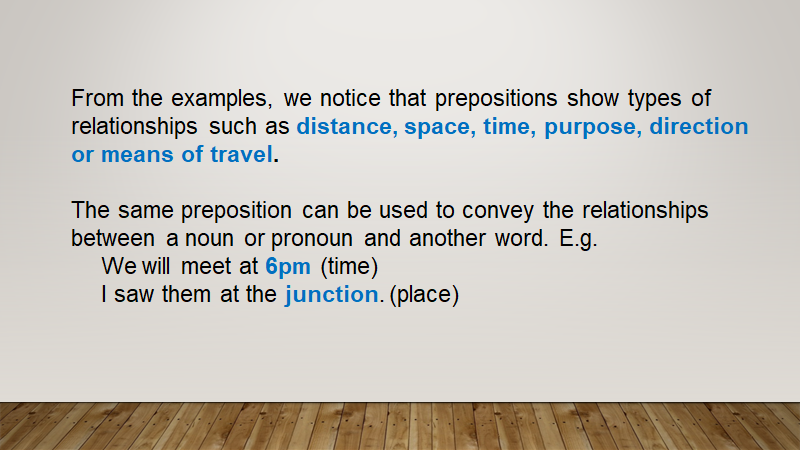
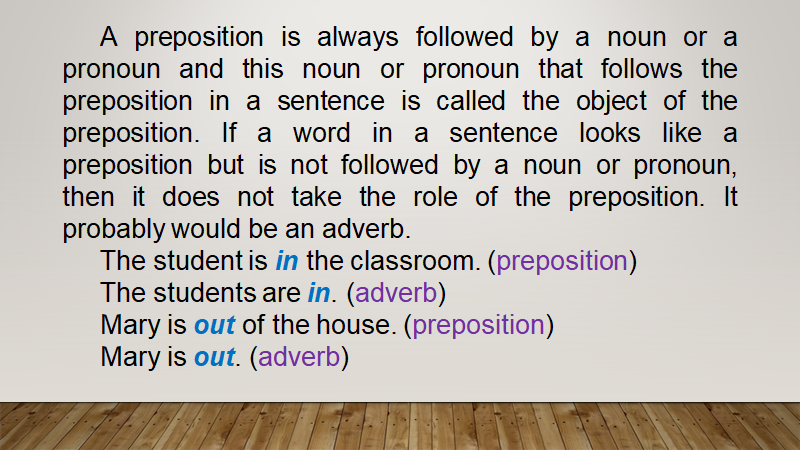
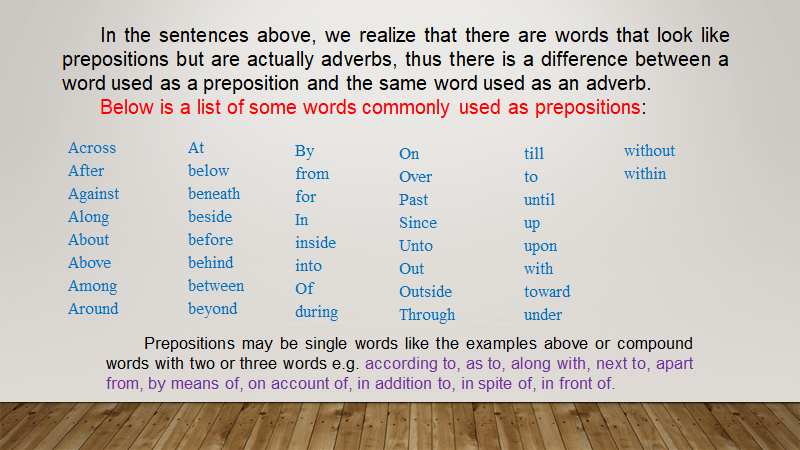
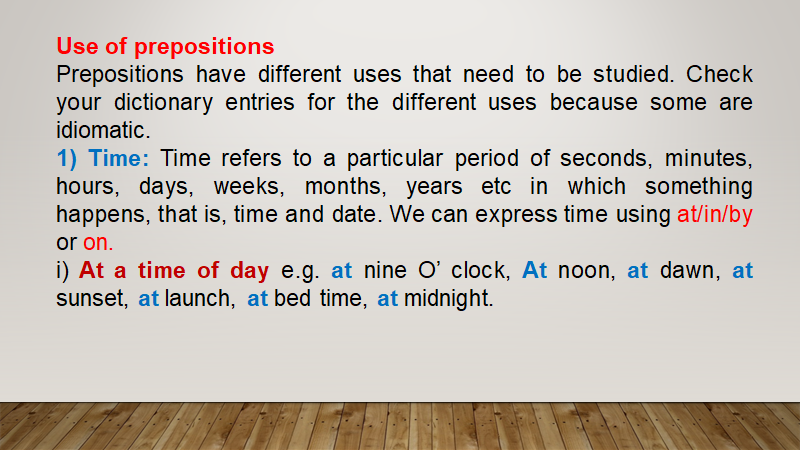
This post illustrates the uses of the preposition. Examples of sentences with prepositions. Prepositions of Time, Place, etc. Watch the video and read carefully through the text.

The Preposition
The Preposition
The Preposition
The Preposition
Advertisements
Uses of prepositions
The Preposition
 
Uses of prepositions
The Preposition

Uses of prepositions

 
Advertisements
Uses of prepositions
Advertisements
The Preposition
Uses of prepositions
Advertisements
Uses of prepositions
The Preposition
Uses of prepositions
Advertisements
The Preposition
Uses of prepositions
Advertisements


Advertisements

The Preposition

https://youtube.com/c/TaminangThereseN

Advertisements
https://youtu.be/fboOcOySQtw The Articles; Definite, Indefinite and zero
Advertisements
Prepositions

https://youtube.com/c/TaminangThereseN

The Prepositions
Advertisements
The Prepositions
The Prepositions

https://youtube.com/c/TaminangThereseN

Advertisements
Uses of prepositions
Advertisements
Uses of prepositions

https://youtube.com/c/TaminangThereseN

Uses of prepositions
Advertisements
Uses of prepositions

https://youtube.com/c/TaminangThereseN

Uses of prepositions
Advertisements
Uses of prepositions
Advertisements

Related Post

The Sentence

Adjectives and Adverbs

Verb Tenses

Mechanics of Writing 1

The Preposition

https://youtube.com/c/TaminangThereseN

Advertisements

Latest post

Click this button to view pages with other posts.

Advertisements

Pages

Advertisements

Download a copy of one of our Revision Lessons for free.

Adjectives and Adverbs Download

Support

Make a free donation of any amount to support this website. Thanks

$2.00

Education For All
Basic and Secondary Learning, and Entertainment. A place for free Learning and entertainment for all.

Advertisements

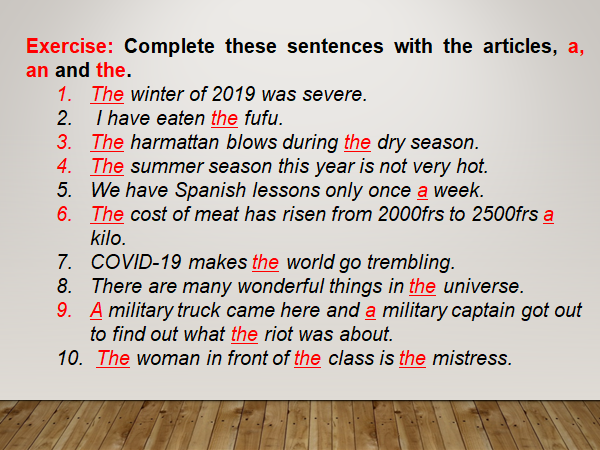
The Articles, Definite, Indefinite and zero

The Articles Definite Indefinite and zero Read these e-book
The Articles Definite Indefinite and zero is a simple and clear presentation of what Articles; Definite, Indefinite, and zero are. Take time to read through or listen to the video.
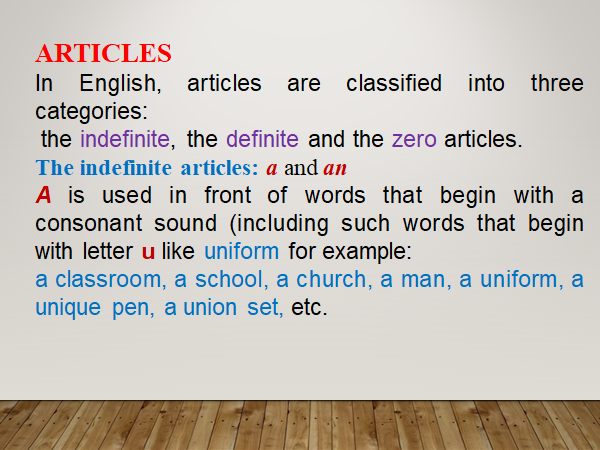
Indefinite articles
Indefinite articles “a and an”
Advertisements
The indefinite article
The indefinite article “a and an”
Advertisements
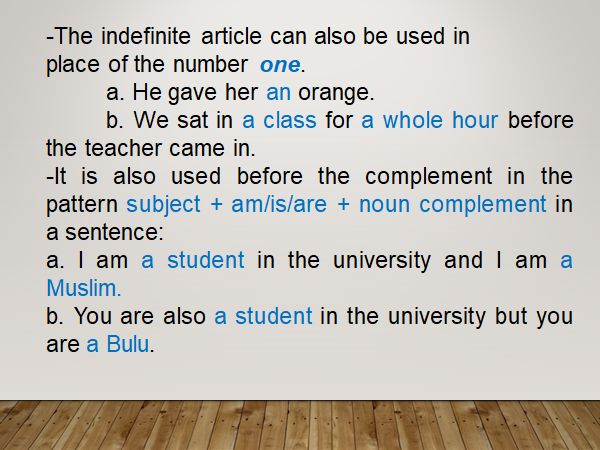
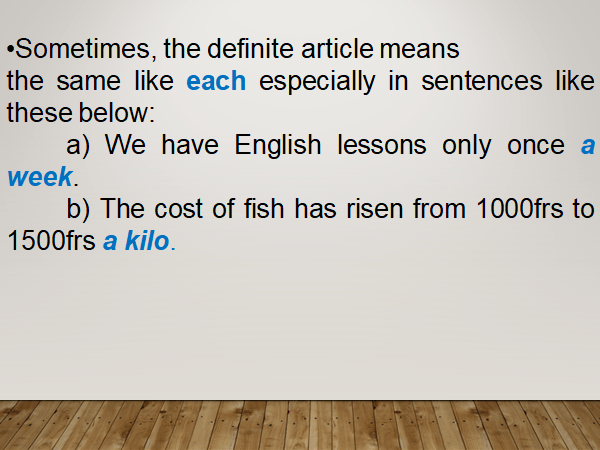
The indefinite article;
The indefinite article; “a”
Advertisements
Advertisements
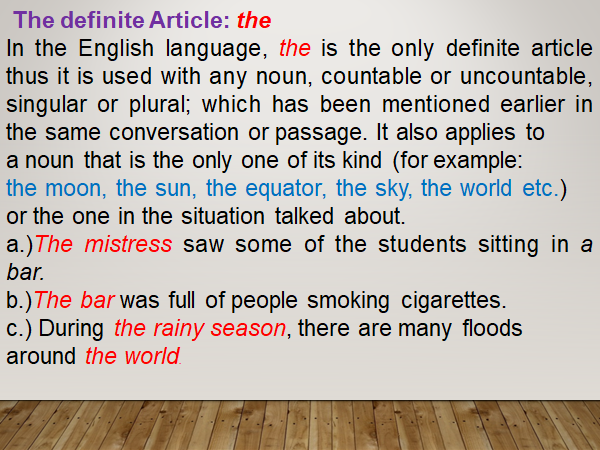
The definite article
The definite article “The”
Advertisements
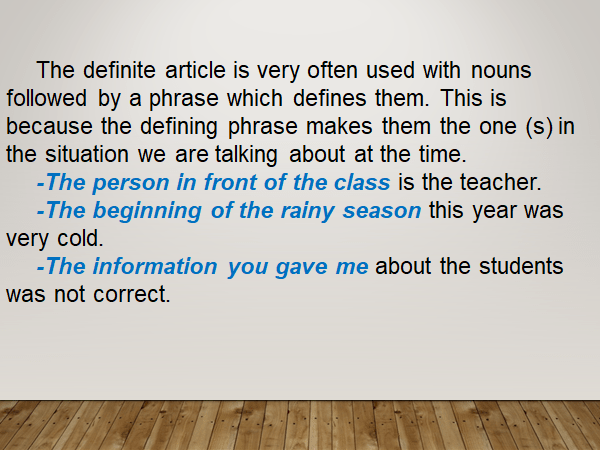
The definite article
The definite article”The”
Advertisements
Advertisements
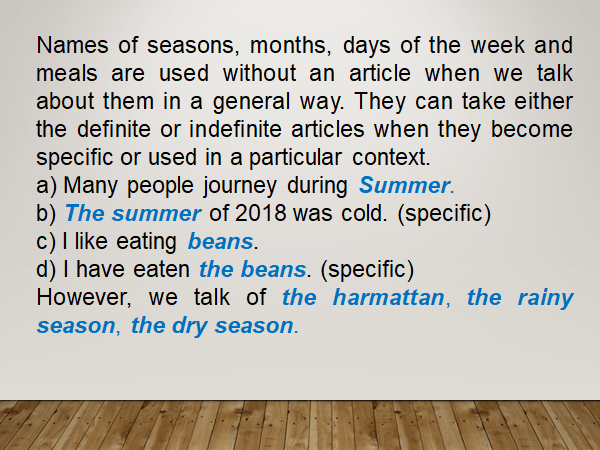
The zero article
The zero article
Advertisements
The zero article
Advertisements
Advertisements
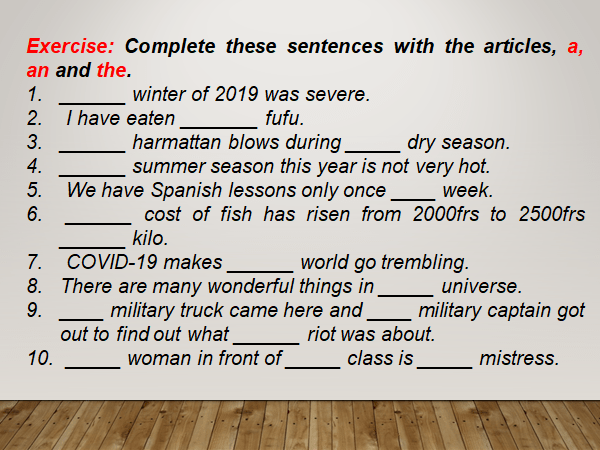
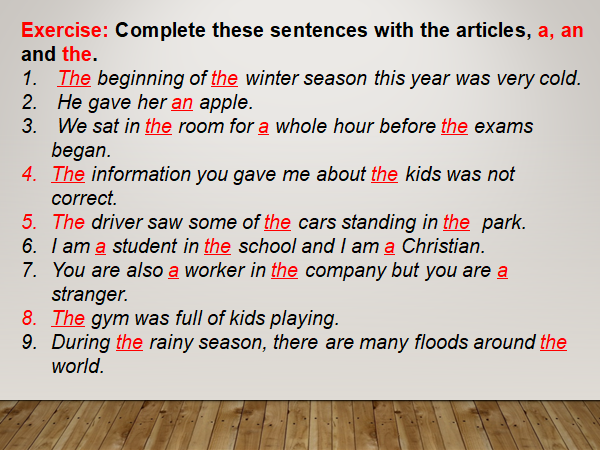
 Definite and indefinite articles exercise 
Definite and indefinite articles exercise
Advertisements
 Definite and indefinite articles exercise 
Definite and indefinite articles exercise
Advertisements
 Definite and indefinite articles exercise 
Definite and indefinite articles exercise
Exercise on definite and indefinite articles
Advertisements
Advertisements

Related:

Aspects Of The English Language

Education For All
Basic and Secondary Learning, and Entertainment. A place for free Learning and entertainment for all. 

Tweet

Verb Tenses


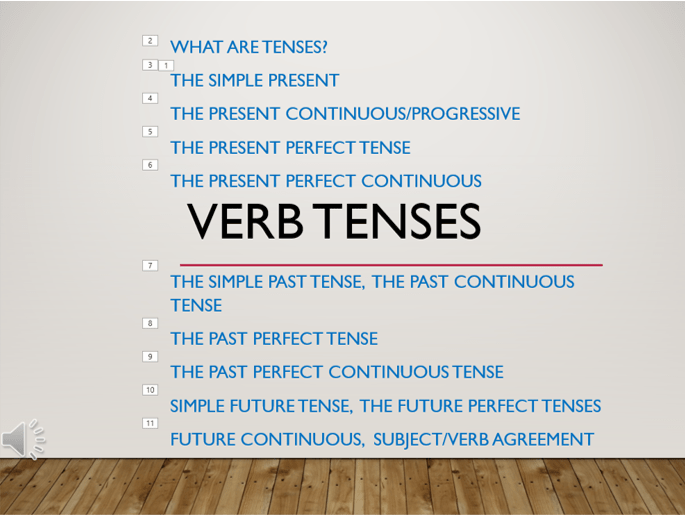
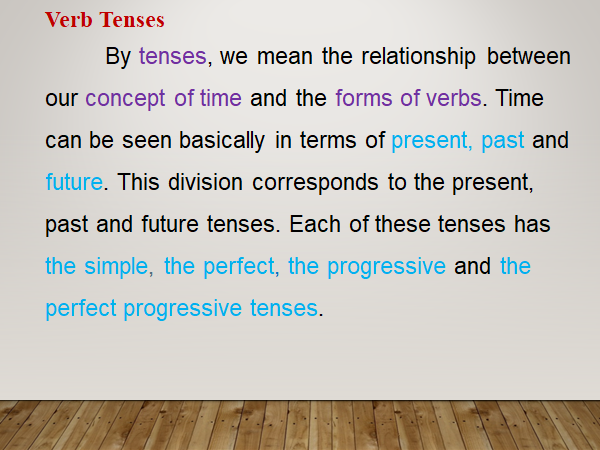
By tenses, we mean the relationship between our concepts of time and the forms of verbs. The following lesson presents to you the various verb tenses.

You may read through the text or listen to the video below or click the podcast link. You can also follow the lesson on YouTube by clicking the link below.

Advertisements

Advertisements

Verb Tenses. By tenses, we mean the relationship between our concepts of time and the forms of verbs. 
Verb Tenses

Advertisements

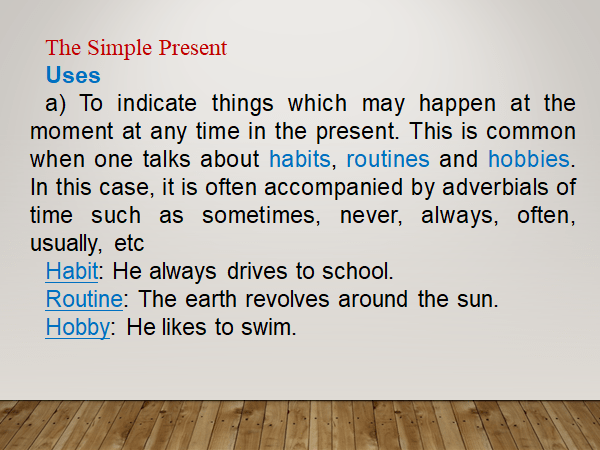
The Simple Present Tense

Advertisements

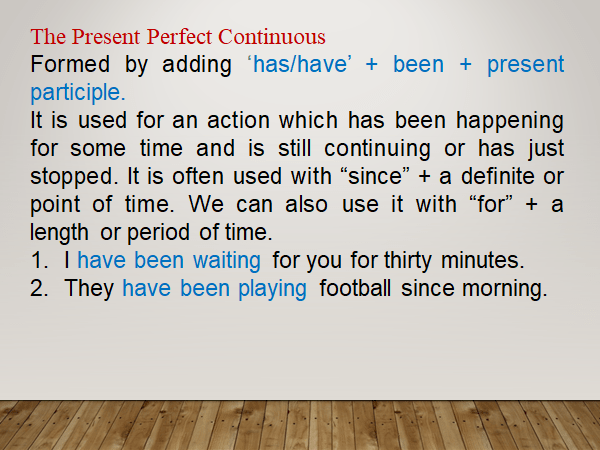
The Present Perfect Continuous Tense
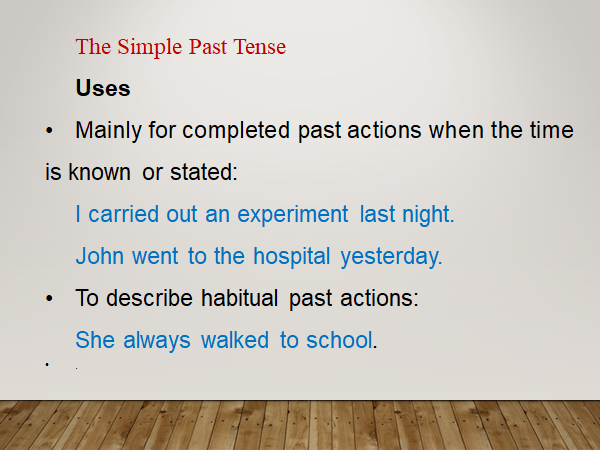
The Present Perfect Continuous TenseThe Simple Past TenseThe Past Continuous TenseThe Past Continuous TenseThe Past Continuous Tense

Advertisements

The Past Continuous Tense
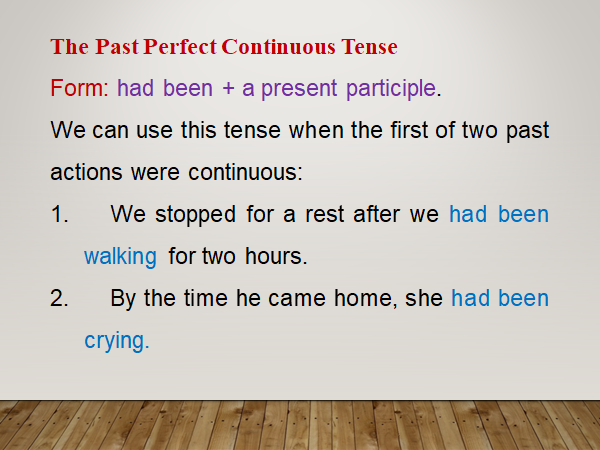
The Past Continuous TenseThe Past Perfect Continuous Tense
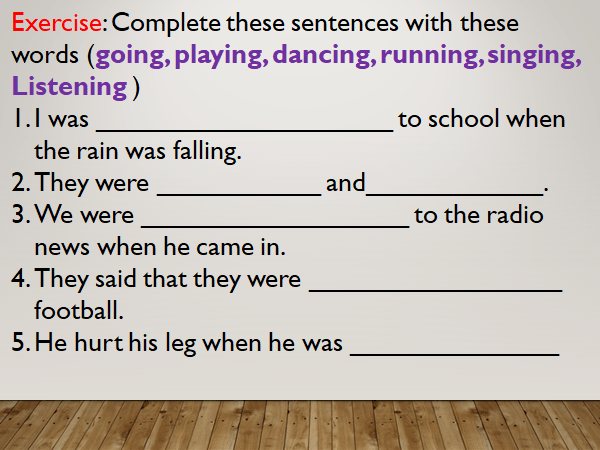
The Past Perfect Continuous Tense
Simple Future Tense

Advertisements

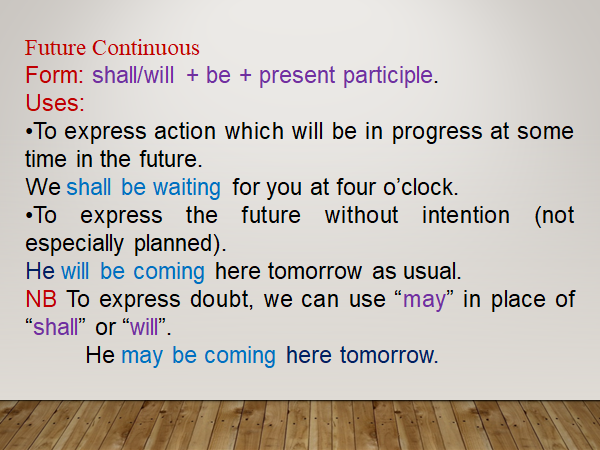
Future Continuous Tense

Advertisements

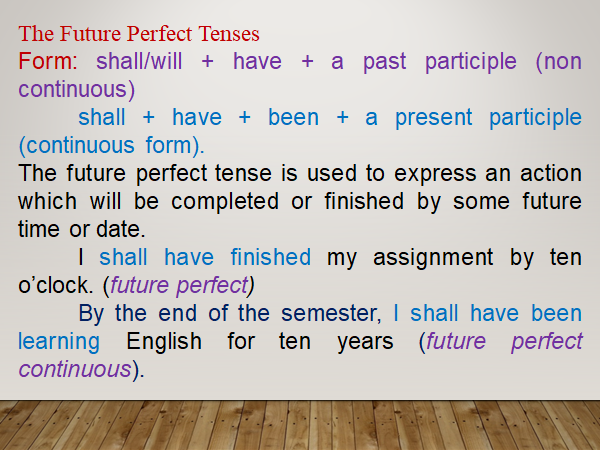
The Future Perfect Tenses

Advertisements

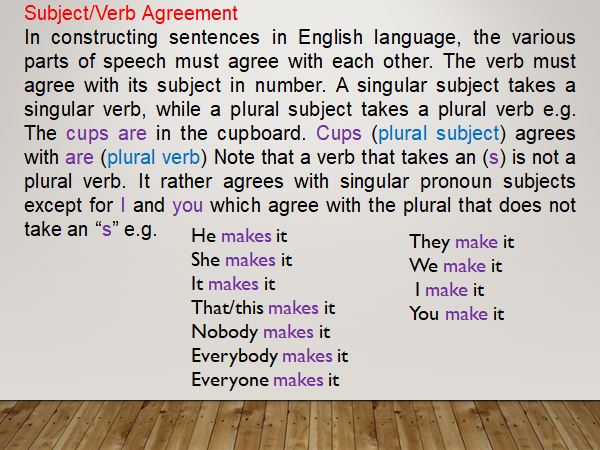
Subject-Verb Agreement

Advertisements


https://youtube.com/c/TaminangThereseN

https://youtu.be/Nhmz_hCm4eI

https://anchor.fm/nwufor/episodes/Verb-Tenses-e1hqfnc/a-a7r695e


Advertisements

Education For All
Basic and Secondary Learning, and Entertainment. A place for free Learning and entertainment for all.

Tweet

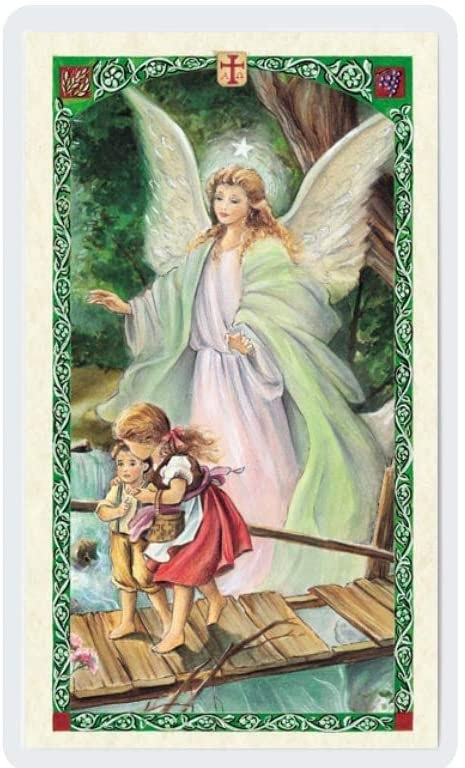
Prayer to our Guardian Angel

https://youtube.com/c/TaminangThereseN

Prayer to Our Guardian Angels.

Advertisements

Angel of God, my Guardian dear, to whom God’s love commits me here, ever this day (night) be at my side, to light and guard, to rule and guide. Amen.

Andzɛ̀rǝ̀ Nywè, ǹlinǝ̀ wa . Nywe fya wa a mbwo wwò mbǝ’ǝ akòŋnǝ̀ zhi. Yii ndzwi nǝbenǝ mwò nǝ njwe senǝ, mǝ ŋwà’àsǝnǝ ̀nkà’a wwo, mǝ dǝ̀sǝnǝ̀ mânduŋǝ a mbwo mwò, mǝ chisǝnǝ̀ wa, mǝ lìnǝnǝ wa, Adzwili .

Advertisements

Gen.18 Angels visited Abraham in human form.

“And the Lord appeared unto him in the plains of Mamre: and he sat in the tent door in the heat of the day;

 And he lifts up his eyes and looked, and, lo, three men stood by him: and when he saw them, he ran to meet them from the tent door, and bowed himself toward the ground, …”

Ex. 32:34 God said to Moses, my angel shall go ahead of you. “Therefore now go, lead the people unto the place of which I have spoken unto thee: behold, mine Angel shall go before thee: nevertheless in the day when I visit I will visit their sin upon them.”

Mark 1:13 Angels minister to Jesus.  “and he was in the wilderness forty days, being tempted by Satan. He was with the wild animals, and angels attended him.”

Advertisements

Acts 5:19 Angels freed Peter, likewise Paul and Silas. “But during the night an angel of the Lord opened the doors of the jail and brought them out.”

Ex. 13:21-22 Angels went before the Israelites in a Pilar of fire and of cloud. “By day the Lord went ahead of them in a pillar of cloud to guide them on their way and by night in a pillar of fire to give them light so that they could travel by day or night.”

Psalm 91:11 Angels would lift us up and save us if in danger. “For he will command his angels concerning you to guard you in all your ways; they will lift you up in their hands so that you will not strike your foot against a stone.”

https://nk472139389.wordpress.com/2021/09/14/fruits-of-my-daily-reflections-1/

Advertisements

Prayer to the Archangels – Verbum Bible
Arch Angel Michael, Gabriel and Raphael The Seven Sorrows of the Blessed Virgin Mary The Hail Holy Queen Prayer in Nkwen Language The Hail Mary Prayer in Nkwen Language

The Seven Sorrows of the Blessed Virgin Mary

The Hail Holy Queen Prayer in Nkwen Language

Latest posts

https://youtube.com/c/TaminangThereseN

The Verb And Forms

The Verb And Forms
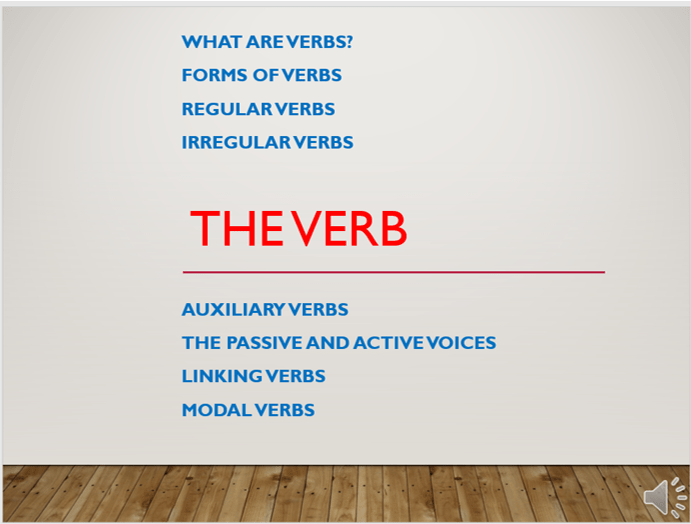
THE VERB
  1. Sub Topics
  2. What are verbs?
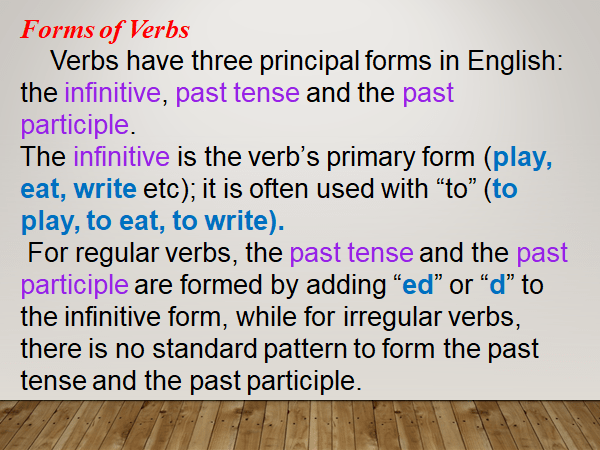
  3. Forms of Verbs
  4. Regular verbs
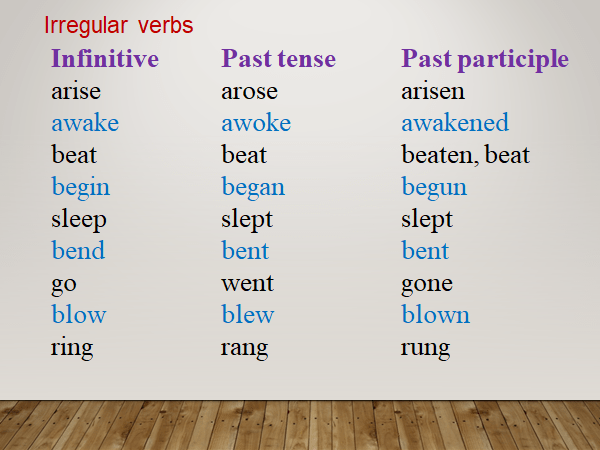
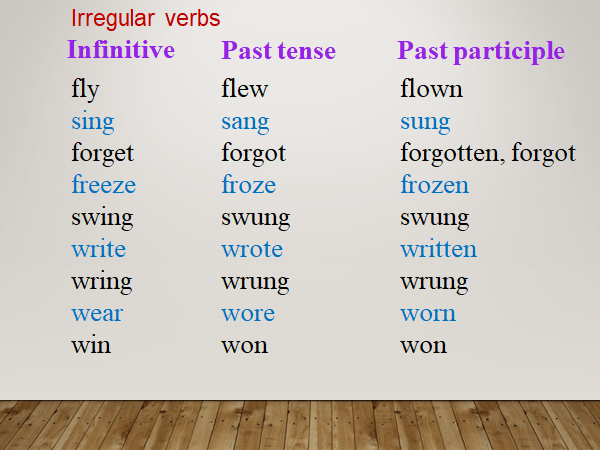
  5. Irregular verbs
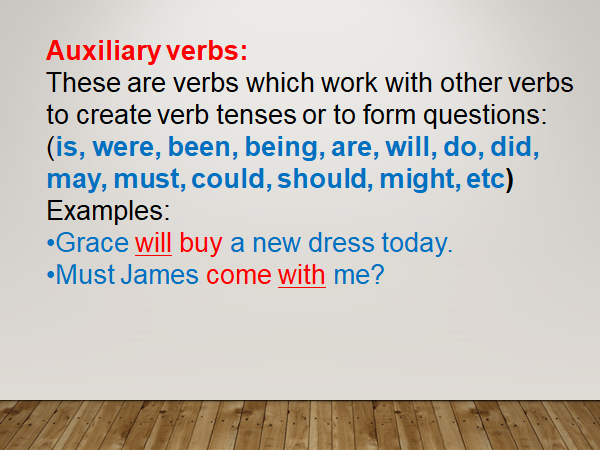
  6. Auxiliary verbs
  7. The Passive And
  8. Active Voices
  9. Linking Verbs
  10. Modal verbs

Forms of verbs

Advertisements

The Verb and Forms
Helpful books


The Verb And Forms

Verbs are an essential component of the English language. They are words used to describe an action, occurrence or state of being. Verbs are the backbone of sentences, allowing us to convey meaning and express ourselves clearly. In this article, we will explore the different types of verbs and verb tenses in the English language. 


Types of Verbs

There are three main types of verbs in the English language: action verbs, linking verbs, and helping verbs. Action Verbs Action verbs are used to describe an action or movement, such as running, jumping, or singing. They can be used in different tenses to indicate when the action took place, is taking place or will take place. Examples of action verbs include: eat, write, read, swim, talk, and dance. 


Linking Verbs

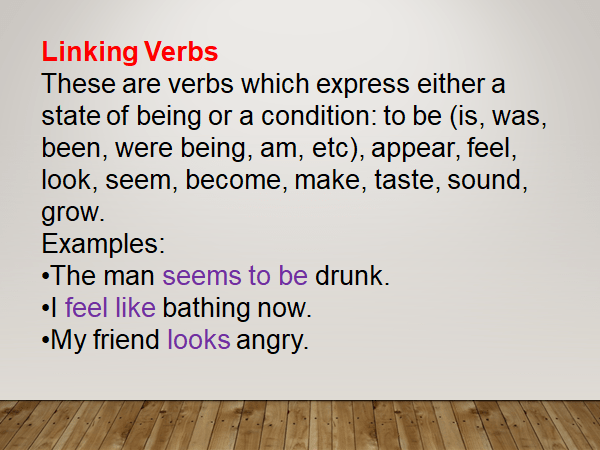
Linking verbs are used to connect the subject of a sentence with a noun, pronoun or adjective that describes it. They do not describe an action or movement. Examples of linking verbs include: am, is, are, was, were, appear, become, seem, and feel. 


Helping Verbs 

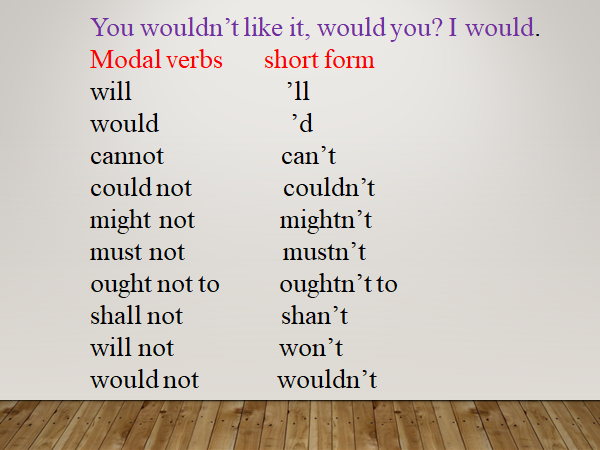
Helping verbs, also known as auxiliary verbs, are used to help the main verb in a sentence. They can be used to indicate time, tense, or to form questions or negatives. Examples of helping verbs include: will, shall, can, could, may, might, should, and would. 


Verb Tenses 

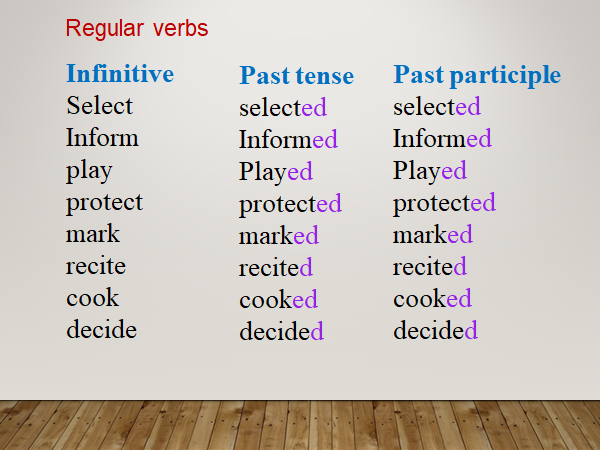
Verb tenses are used to indicate the time in which an action occurred. There are three main verb tenses in the English language: past, present, and future. Past Tense The past tense is used to describe an action that has already happened. It is formed by adding -ed to the base form of the verb. For example, the past tense of the verb “walk” is “walked”. However, irregular verbs do not follow this pattern, and their past tense forms are unique. Examples of irregular verbs include: go (went), eat (ate), and swim (swam). 


Present Tense 

The present tense is used to describe an action that is happening now or is generally true. It is formed by using the base form of the verb. For example, the present tense of the verb “read” is “read”. However, some verbs have irregular present tense forms, such as “be” (am, is, are). 


Future Tense 

The future tense is used to describe an action that will happen in the future. It is formed by using the helping verb “will” or “shall” followed by the base form of the verb. For example, the future tense of the verb “play” is “will play” or “shall play”. In addition to the three main verb tenses, there are also four additional tenses in English: present perfect, past perfect, future perfect, and present continuous.


 Present Perfect 

The present perfect tense is used to describe an action that began in the past and continues up to the present. It is formed by using the helping verb “have” or “has” followed by the past participle of the verb. For example, the present perfect tense of the verb “study” is “have studied” or “has studied”. 

Past Perfect 

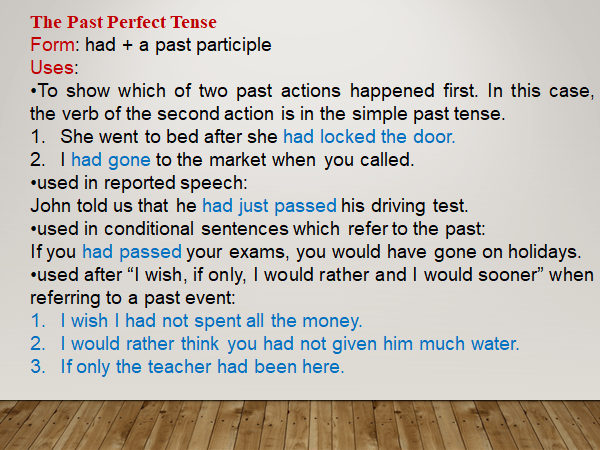
The past perfect tense is used to describe an action that was completed before another action in the past. It is formed by using the helping verb “had” followed by the past participle of the verb. For example, the past perfect tense of the verb “eat” is “had eaten”. 


Future Perfect 

The future perfect tense is used to describe an action that will be completed before a specific time in the future. 

The illustration below says more about verbs and verb Tenses.


Advertisements

The Verb And Forms
The Verb And Forms

Advertisements

Regular verbs
The Verb And Forms
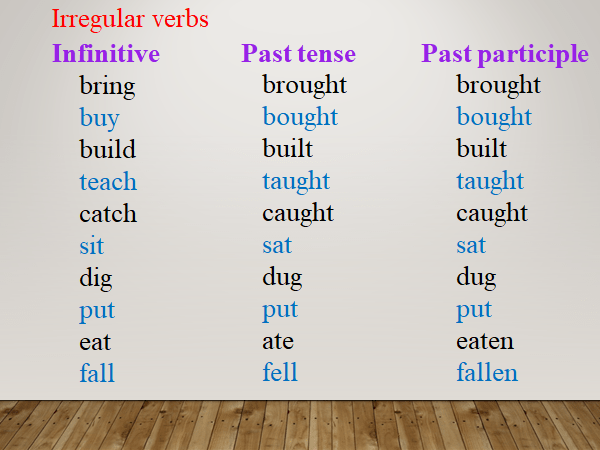
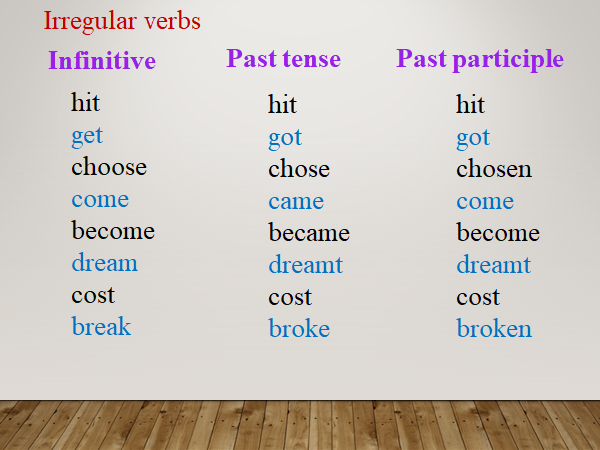
Irregular verbs

Advertisements

Irregular verbs
The Verb And Forms

Advertisements

Irregular verbs
The Verb And Forms

Irregular verbs
Irregular verbs
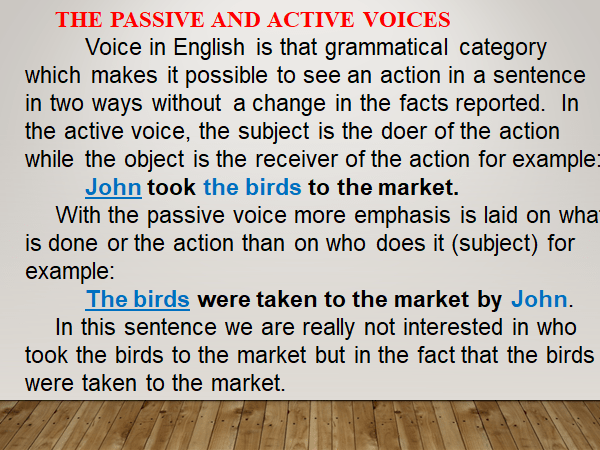
THE PASSIVE AND ACTIVE VOICES

Voice in English is that grammatical category that makes it possible to see an action in a sentence in two ways without a change in the facts reported. In the active voice, the subject is the doer of the action while the object is the receiver of the action for example:
John took the birds to the market.
With the passive voice more emphasis is laid on what is done or the action than on who does it (subject) for example:
The birds were taken to the market by John.
In this sentence, we are really not interested in who took the birds to the market but in the fact that the birds were taken to the market.


Advertisements

Advertisements

Stories That Bring Great Impact On Life

Aspects Of The English Language

Basic Mathematics

Poems About Life

Responsorial Psalm Chants For Sundays

General Knowledge Questions and Answers Revision

Nkwen Language Lessons

Nkwen Language Gospel Readings For Year C

Home

https://youtube.com/c/TaminangThereseN

Advertisements


Advertisements

The Verb

https://youtube.com/c/TaminangThereseN

Advertisements
The verb https://youtu.be/aO51lxOI9Rc
Advertisements
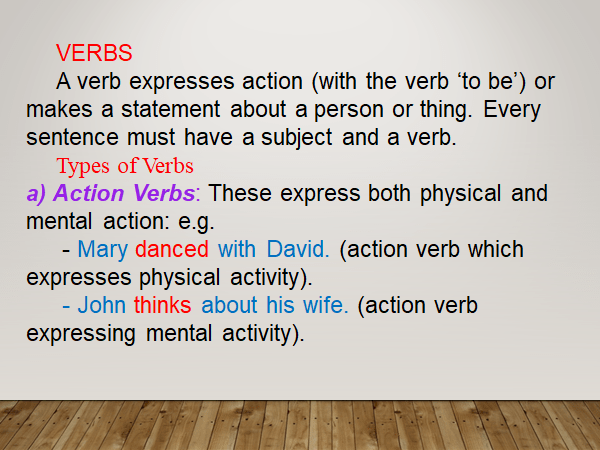
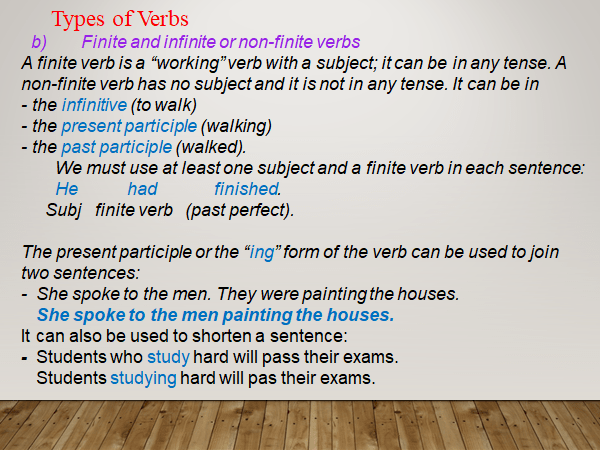
A verb expresses action (with the verb ‘to be’) or makes a statement about a person or thing. Every sentence must have a subject and a verb.
Types of Verbs
a) Action Verbs: These express both physical and mental action: e.g. ,,,
What are verbs
Advertisements
Types of verbs

https://youtube.com/c/TaminangThereseN

Forms of verbs
Advertisements
Regular Verbs
Irregular verbs

https://youtube.com/c/TaminangThereseN

Advertisements
Irregular verbs
Advertisements
Irregular verbs
irregular verbs
Advertisements
Auxiliary Verbs
The passive and active voice

https://youtube.com/c/TaminangThereseN

Advertisements
Linking Verbs
Advertisements

Related Posts

Verb Tenses

Adjectives and Adverbs

The Sentence

The Preposition

Advertisements

Latest Posts

Advertisements

Page List

Advertisements

Download a copy of one of our English lessons for free.

Support

Make a free donation of any amount to support this website. Thanks

$2.00

Advertisements

Wise Sayings in Nkwen Language part 3

https://youtube.com/c/TaminangThereseN

Wise Sayings in Nkwen Language part 3

Wise Sayings in Nkwen Language part 3 is made up of figures of speech and idioms often used by the Nkwen people to pass on important messages about life. A Literally translation very close to the exact meaning of the different wise sayings has been attempted. This community of people has many of these wise sayings. More of them had been presented in two different posts:

Nkwen Language Wise Sayings Mǝbǎkò’ò

More On Wise Sayings In Nkwen

Advertisements

“Ǹchə̀ ngwo dzwi nə ngwo.”

The dog’s curse is on itself. (Do not revenge or vengeance is of God)

Advertisements
Advertisements
1 fə̀li’i dzwi ndyâ. There is smoke in the house. There is a stranger in the house.
2 Azuŋə zuma ntiŋkaŋə nunə nshye nzə boŋə məŋkhə kə a tiŋə ndəŋə, boŋə a kakə zə. While an elder sees while sitting even if a child climbs a tree he cannot see.
3 Nchyambi moo ŋù bə ndəmə yε. A man’s first child is his brother or sister.
4 Boŋə o ka wwò ò kakə mbàŋə bə. If you do not fall you cannot pick a stick.
5 Boŋə fənyə tya wwo ò  zə ŋwεŋwε tsətsuŋə ò khə. If a snake bites you, you shall run when you see a worm.
6 Mmi mə kwi’ifò ə̀fwò məyii. The eyes of a Kwifor (Palace Masquerade of Authority) are the grasses.
7 Ngamə ləmətə nzεrə wwε nəkàŋə The discussion in the house was interesting which caused the thief to laugh from the ceiling.
8 Nkabə bwo ŋù nə kakə mboŋnə.  One cannot discuss/chat with money.
9 Akòŋnə chya nkabə. Love is more important than money.
10 Abwo mo’o bikàkə nəbu’u nkwεrə. One hand cannot tie a bundle.
11 Nkabə ŋu bə̀ bi. A man’s money/wealth is in his people.
12 Boŋə njə̀ ka ala’a kuu bəkəmə jyə kə̀? If there are no defaulters what will kingmakers eat? If there are no fines or penalties what will the government benefit from?
13 Nəzo’o bə əkwerə ntiŋə Marriage is perseverance.
14 Bεnə abàà  zhə adi’i wuma abwo zhə bə kù’ù wə . Hang your bag where your hand can reach. Embark only on tasks that you are able to achieve.
15 Bə lεrə lεrə nshye wi .  We are only tallying in this world.
16 Azuŋə nshi’inə nə kakə nlεrətǝ . Good things never last.
17 Fə̀lya ndə̀mǝ nə̀wwo. Sleep is the brother/sister to death.
18 Ò təmə akù zhə  a bânǝ̀ ngo’o. If you hid your foot, let the stone break instead. 
19 Boŋə ò zii abi boŋə o bə jyə məjyə mə moo. If you spend your day at home, you will eat the child’s food. (dangers of laziness)
20 Njwe mbə̀ŋə a zhi nshye. A rainy day is known by the earth. (The reward of cruelty shall one day come)
21 Ǹnà fa zanə bə zə̀ mə̀ konə̀ . The animal that separates from the fold is bound to be caught.
22 Abenə – Nfò bòŋə bəgwè. The King’s dance is good for the comedians. (Said when people enjoy themselves foolishly or exaggeratively)
23 Swigərə a dzwi ma mmu ma boŋə  ə tô nta’à. Gossiping is a wildfire that can burn a hill.
24 Fə̀saŋə fəmo’o bikakə ndyâ nzi. A single broomstick cannot sweep the house.
25 Ǹnà bika nshye nwwo mbəŋnə tə fə̀ngò’ò. Meat cannot fall down and be picked up without a grain of sand.
26 Àwuŋə ǹtsə̀mə̀ boŋə nə awuŋə nkà’à. For a hunting expedition to be successful young hunters must be present.
27 boŋǝ abarə ndya bonə mbyi noŋə̀ wǝ. If the backyard is good goats will surely lay on.
28 Ntâ ti bitə bə’ənə lya səŋə kə ndarə yε. The branch broke just when the bird was taking off.
29 Taa mbə̀ŋə̀ nə gha. Protect yourself from the rain when it is still far off. (The importance of preparing in time}
30 Tso’o  atsə̀’ətyə nkwε maku’u wwò. Remove your cap and take something to eat. (This stresses the importance of humility)
31 Tu’u nkyi məmə nkhe. Carry water in a basket. (Said when someone embarks in an unachievable business)
32 Kəfəmə ghǝ̀rə anyù nə anyù. The bee is doing something for something.
33 Mayàbǝ̀ be anyu ngu’u . Love affairs are things of the past.
34 Ba wwo bə təmə nzεrə. Make way for the thief to be caught.
35 Chyâ ndzəmə fὲrə̀ nkwurə aborə nəngùŋə. Eat premature plantains because of the wind. (Said when one has an advantage in a disappointment.
36 Ngwo tyǝnǝ a nǝ akwε. If you hear dogs fighting, there is a bone.
37 Boŋǝ ò lεrə  ntenə ò chə nkwi dzwâ mfye. If you stay out of home for long you may harvest wet wood.
38 kə alə’ərə zhə nə khə chyâ. Don’t run faster than your shadow.
39 Mε’ε azuŋə mbə azuŋə. Throw something and pick something.
40 ndiŋə ntsəmə dzwi nǝ taŋka yε. Every witch/wizard has a friend.
41 Ǹna mângòŋə bikàkə ntaŋə. Meat for many is not tough. A task for many people is never difficult.
42 Ntsǔ kwurə əkwε. A mouth that eats bones. (empty talking)
Wise sayings in Nkwen Language
Advertisements

More on wise Sayings in Nkwen

Other Wise Sayings in Nkwen

https://youtube.com/c/TaminangThereseN

Advertisements

Latest Posts

Advertisements

Page List